
Avoiding the Suez Canal: How Alternative Shipping Routes Affect Voyage Time and Costs
The shortest shipping route is not always the best option. Geopolitical tensions, security threats and operational restrictions can force vessels to avoid major maritime passages such as the Suez Canal and the Red Sea.
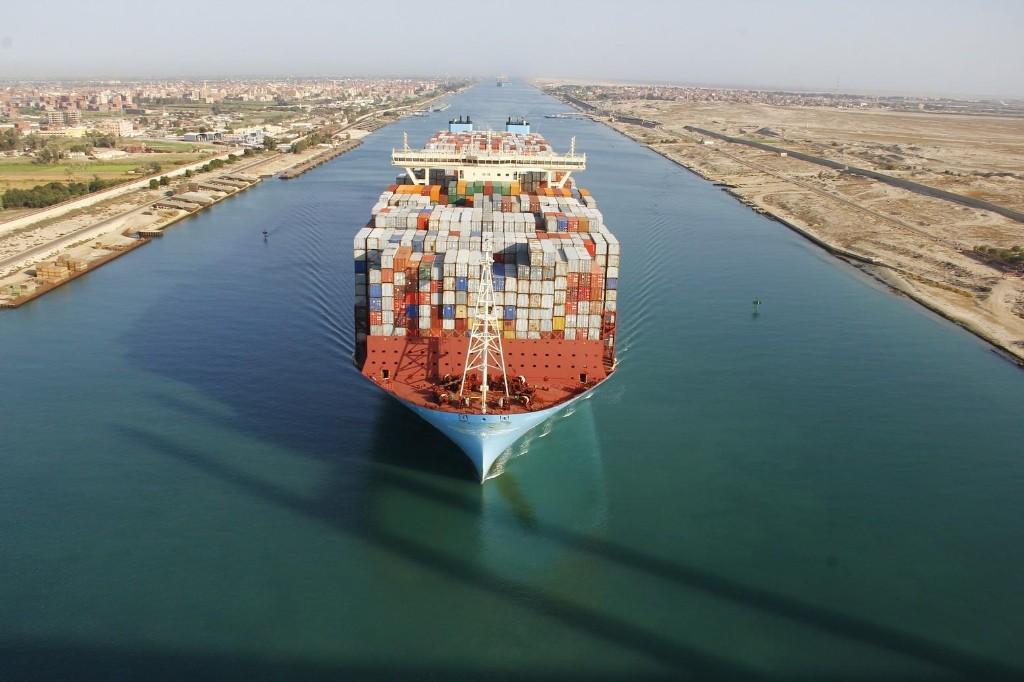
For shipping companies, vessel operators and charterers, choosing an alternative route can significantly affect voyage duration, fuel consumption, operational costs and delivery schedules.
When vessels operating between Asia and Europe avoid the Suez Canal, they often travel around Africa via the Cape of Good Hope instead. According to World Bank research, this diversion can add approximately 3,000–3,500 nautical miles and seven to ten days to a typical voyage.
Understanding these differences before committing to a route is essential for effective voyage planning.
With SeaETA's shipping route calculator, operators can compare approximate sailing distances and estimated transit times, including scenarios that avoid the Suez Canal.
Why do ships avoid the Suez Canal?
The Suez Canal connects the Mediterranean Sea with the Red Sea and provides one of the most important maritime shortcuts between Europe and Asia.
Without it, many vessels must sail south around the African continent, passing the Cape of Good Hope before continuing toward their destination.
Although the canal itself may remain operational, security concerns elsewhere along the route can make the passage unsuitable for particular vessels or operators.
Common reasons for choosing an alternative shipping route include:
- Security threats: Armed conflict, missile attacks or other threats to commercial vessels.
- Insurance considerations: Increased war-risk insurance premiums for certain areas.
- Operational restrictions: Company policies, charter-party requirements or vessel-specific limitations.
- Canal disruptions: Temporary closures, congestion or transit restrictions.
- Commercial considerations: A longer but more predictable route may sometimes be preferable to an uncertain transit.
The situation can also change quickly.
During 2026, several major shipping services began returning to the Suez Canal following security reviews. For example, Maersk announced in November 2026 that its ME1 service would transition back to the Suez route, while emphasizing continued security monitoring.
This highlights why voyage planners should be able to evaluate both routes rather than relying on a single fixed assumption.
Suez Canal vs Cape of Good Hope: How much longer is the alternative?
The difference in sailing distance depends on the departure port, destination and route selected.
For voyages between Northern Europe and Southeast Asia, the Cape of Good Hope alternative commonly adds thousands of nautical miles.
Consider a simplified example of a vessel operating at an average speed of 14 knots.
| Planning factor | Example |
|---|---|
| Additional sailing distance | 3,000 nautical miles |
| Average vessel speed | 14 knots |
| Additional sailing time | Approximately 9 days |
| Alternative passage | Cape of Good Hope |
The calculation is straightforward:
Additional sailing time = Additional distance ÷ Average vessel speed
3,000 nautical miles ÷ 14 knots = 214.3 hours, or approximately 8.9 days.
This is additional underway time only. It excludes potential waiting periods, bunkering stops, weather delays and other operational considerations.
A route diversion of this scale can affect vessel availability, cargo delivery dates and subsequent charter commitments.
How much does avoiding the Suez Canal cost?
Additional sailing time generally leads to higher operating costs, particularly through increased fuel consumption and longer vessel employment.
The actual financial impact depends on vessel type, speed, fuel consumption, bunker prices and charter arrangements.
Example: Calculating the additional voyage cost
Assume a commercial vessel has the following operating characteristics:
| Cost factor | Example assumption |
|---|---|
| Additional voyage duration | 9 days |
| Fuel consumption | 30 tonnes/day |
| Fuel price | USD 600/tonne |
| Vessel daily cost | USD 25,000/day |
Under these assumptions:
Additional fuel cost
9 days × 30 tonnes × USD 600 = USD 162,000
Additional vessel cost
9 days × USD 25,000 = USD 225,000
Combined additional cost: approximately USD 387,000
This is an illustrative calculation, not a quotation or a representative cost for every vessel.
It also does not represent the complete net cost difference. Avoiding Suez can eliminate canal transit charges and potentially reduce certain insurance or security expenses. Additional emissions-related costs, port calls and schedule disruption may need to be considered as well.
A commercial comparison should account for both the extra costs of the longer route and the expenses avoided by not using the canal.
Why voyage planning matters during geopolitical disruptions
Route decisions affect more than the immediate sailing.
An additional nine days at sea may influence the vessel's next assignment, contractual delivery obligations and the availability of equipment or personnel at the destination.
For commercial shipping, an accurate estimate of the new arrival date can support better decision-making before a vessel departs.
For offshore support vessels, heavy transport vessels and project cargo operations, the impact may be even more complicated.
A delayed arrival can affect installation windows, offshore campaigns, port logistics and the availability of other vessels involved in the same project.
Early comparison of alternative routes makes it easier to understand these potential consequences and communicate realistic delivery expectations.
How to compare alternative shipping routes with SeaETA
SeaETA provides a straightforward way to estimate port-to-port sailing distances and transit times.
Instead of calculating the additional distance manually, users can generate route estimates using different routing assumptions.
To compare a passage through Suez with an alternative:
- Select departure and destination ports. Enter the origin and destination in the SeaETA calculator, such as Rotterdam and Singapore.
- Enter your vessel speed. Use a realistic average speed in knots rather than the vessel's maximum speed.
- Calculate the normal route. Review the estimated nautical distance, sailing duration and plotted route.
- Enable "Avoid Suez Canal". Recalculate the voyage to examine an alternative that excludes the Suez passage.
- Compare the results. Use the difference in nautical miles and estimated transit days to assess potential schedule and cost impacts.
The resulting estimates can be used as inputs to fuel budgeting, vessel scheduling and commercial voyage evaluations.
For example, start with SeaETA's Rotterdam to Singapore route estimate, then use the main calculator to compare the Suez and Suez-avoidance scenarios.
SeaETA also provides additional planning features, including weather-adjusted ETA estimates, multiple port stops and route exports on eligible plans. See how SeaETA works for details.
SeaETA does not independently determine whether a passage is safe, and its routing estimates should not replace official nautical charts, security advisories or an approved vessel passage plan.
Planning for uncertainty: Compare routes before making decisions
A practical voyage planning process should consider more than one scenario.
For a vessel travelling between Europe and Asia, this could mean comparing a normal Suez transit, an alternative around the Cape of Good Hope and different average sailing speeds.
These comparisons can help answer important commercial questions:
How much later could the vessel arrive if Suez is avoided? How much additional fuel would the longer passage require? Would a change in the expected arrival date affect the next charter or project schedule?
The answers may influence whether to accept additional sailing costs, adjust a contractual delivery date or reconsider a vessel's planned departure.
When conditions change, a revised route calculation provides a useful starting point for updating commercial and operational estimates.
Frequently asked questions
What is the alternative shipping route to the Suez Canal?
For many commercial voyages between Europe and Asia, the main alternative is sailing around Africa via the Cape of Good Hope. The suitability and additional distance depend on the ports involved, vessel characteristics and prevailing restrictions.
How many extra days does avoiding the Suez Canal add?
For typical Europe–Asia voyages, historical disruption analyses have estimated approximately seven to ten additional days for diversions around Africa. Actual transit time depends on sailing distance, vessel speed, weather and operational conditions.
Does avoiding the Suez Canal increase fuel costs?
Usually, yes, when the alternative involves additional sailing distance at a comparable operating speed. However, the complete financial comparison should also consider avoided Suez Canal fees, insurance differences and other voyage expenses.
Can SeaETA calculate a route that avoids the Suez Canal?
Yes. SeaETA includes an Avoid Suez Canal option that allows users to compare approximate alternative routes, nautical distances and transit times.
Can SeaETA calculate the total cost of rerouting?
SeaETA provides route distance and transit-time estimates that can be used in a separate cost calculation. Total voyage costs should be determined using vessel-specific fuel consumption, bunker prices, daily operating costs and any applicable fees.
Plan your next voyage with SeaETA
Global shipping routes can change due to security concerns, geopolitical developments and operational restrictions.
Whether you are evaluating a voyage through the Suez Canal or considering an alternative around the Cape of Good Hope, understanding the impact on distance and transit time is an important first step.
Compare your route options before committing to a schedule.
Use SeaETA's free shipping route calculator to estimate sailing distances, compare alternative routes and understand how route changes may affect your vessel's ETA.
For more information on estimating transit duration, read our guide to calculating boat travel time.
SeaETA provides approximate voyage planning estimates only. It is not intended for navigation, real-time threat assessment or official voyage execution.